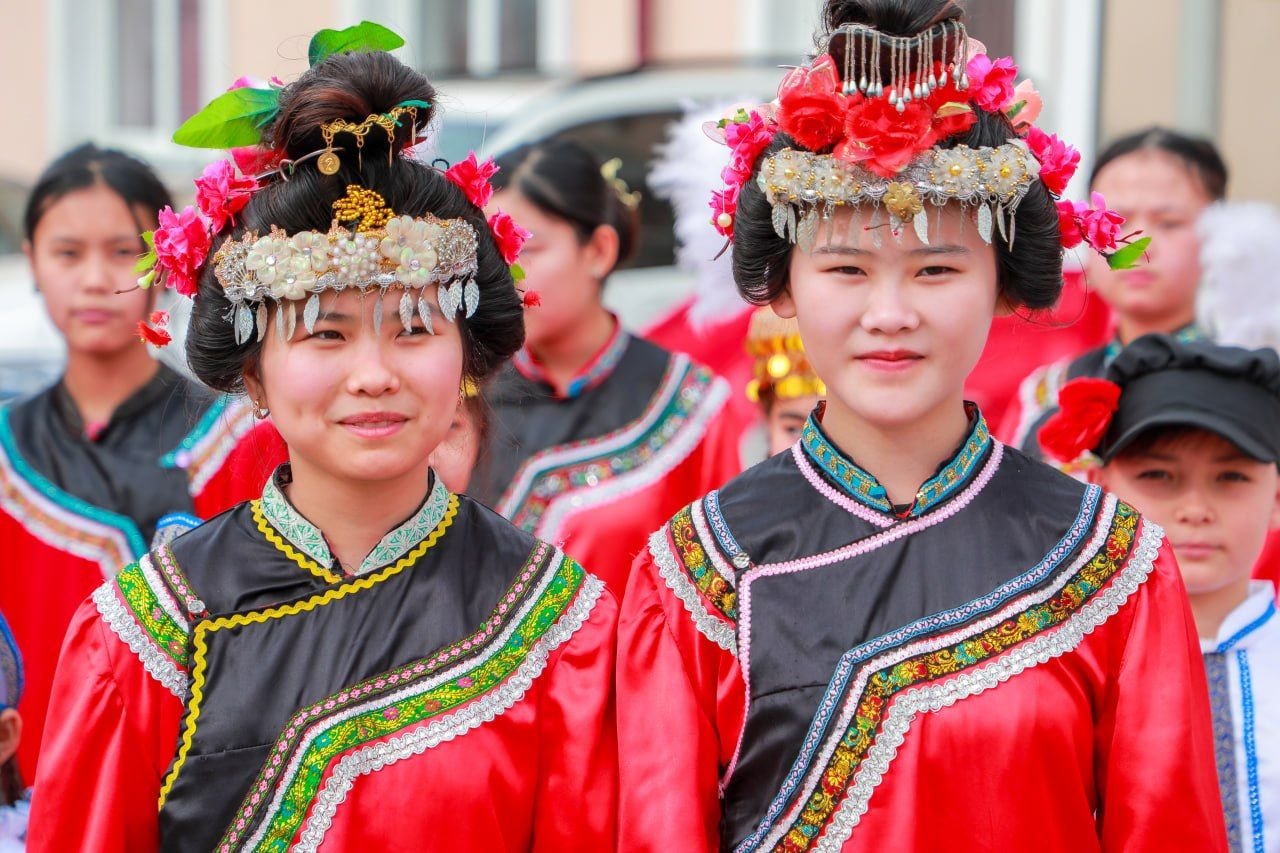
Of all the ethnicities and nationalities that make up the vast Central Asian region, among the most unique you will come across are the Dungans. In this blog we will explore who they are, how they arrived here and the impact they have left on the region.
Table of Contents
Origins of the Dungan People
The term Dungan (a Turkic word of unknown origin) is what the officials in the Soviet Union used to refer to the ethnic Hui people of Northwestern China who settled in the USSR. The Hui are a Chinese ethnic minority who practice Islam. The Hui ancestors were Muslim traders and military officials from the Silk Road of Central Asia and Persia who migrated to China and intermarried with the local Han and Mongolian populations. Over time, they adopted Chinese languages and characteristics while still retaining certain customs- such as headscarves for women and abstaining from pork consumption, the most common meat found in China.
The Hui people ended up in the territory of the Russian Empire as a result of the 1862-1877 Dungan Revolt. Frustrated by unfair treatment and facing competition for scarce resources from the Han Chinese and the Qing government, the local Muslims staged a fierce uprising in a bid for autonomy. The Qing ruthlessly suppressed the uprising, enslaving or killings tens of thousands of people. Many decided to flee over the border to the Russian Empire. More emigrated in the following decade when Russia returned lands to China that it had occupied during the revolt.
Although they had to adapt some elements of their lifestyle, such as youth marriages and cutting off their queues (long braided hair) they adapted well to life in Russia.
Life in the Soviet Union
The Dungans experienced significant changes in the Soviet Union consistent with the country’s policy on nationalities. They were classified as a distinct ‘Dungan’ nation in the 1920’s, in line with Stalin’s view that a nation needed its own language, culture and territory which helped promote internationalism among Soviet peoples. The Dungan language, a dialect of Mandarin with Persian and Arabic loanwords, was codified into a Cyrillic script with the government launching Dungan schools, newspapers and other literature. It is the only form of Chinese written in Cyrillic.
They kept their agrarian lifestyle and fared better than other nationalities in the region as a result of collectivization and other extreme land practices of the period. A significant number of Dungans fought for the Soviets in WW2- including Vanakhun Mansuza, a Red Army mortar-crew commander who died in the Battle of Kursk and was awarded Hero of the Soviet Union- the country’s highest military honour.
Although the state atheism enforced by the Soviets suppressed open religious practice, they were able to retain their cultural identities and there are many homogeneous Dungan villages in Kazakhstan and Kyrgyzstan today.
The Dungan Community today
Some of the Mosques that were closed during Soviet times have reopened- including a stunning example in Karakol, Kyrgyzstan which was built in the 1910’s without any nails by a Chinese architect who incorporated traditional design elements into the building. Today, it is used by Dungan and non-Dungan muslims.
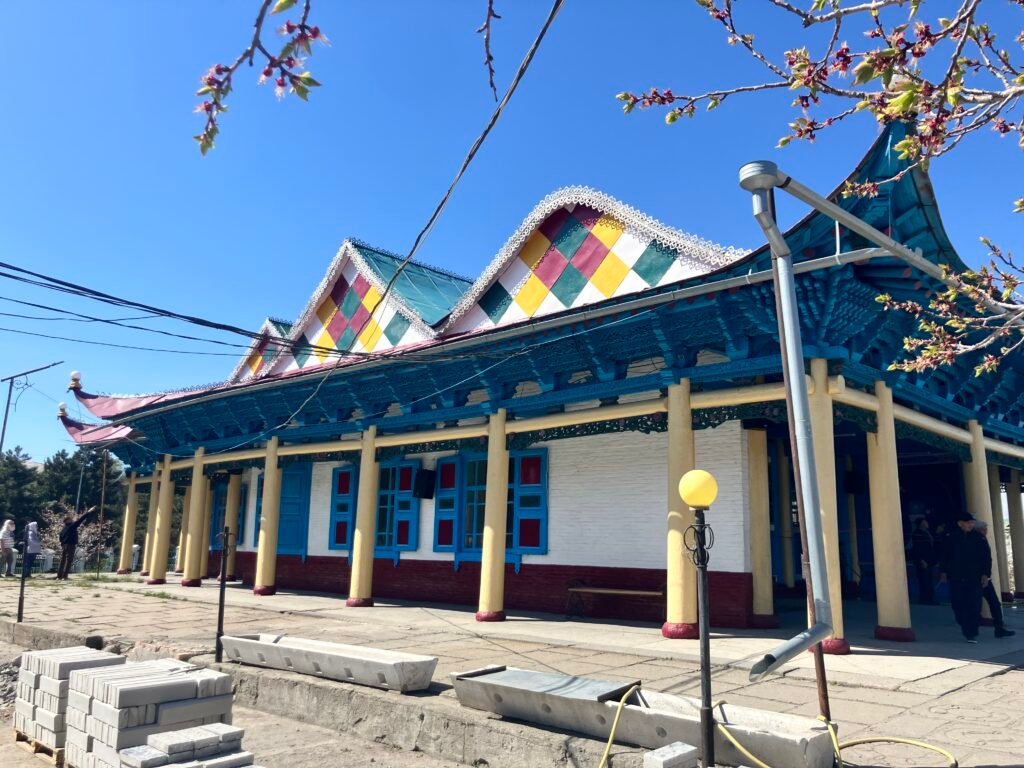
The Dungan mosque in Karakol
A big impact has been on the local cuisine. There are many Dungan restaurants and dishes which incorporate a fusion of Chinese cooking adapted to Central Asian ingredients, soviet-era influences and strict halal rules. Hand-pulled noodles, mutton and Russian dumplings are common elements of this fusion.
Although there have been some ethnics flareups between themselves and the core population members, notably in Kazakhstan, they have retained their tight-knit communities and way of life over nearly two centuries of war, revolution and modernization.
If you would like the chance to experience the unique cultural outputs of this unique community, join us in Kyrgyzstan on of our Five Stans Tours.