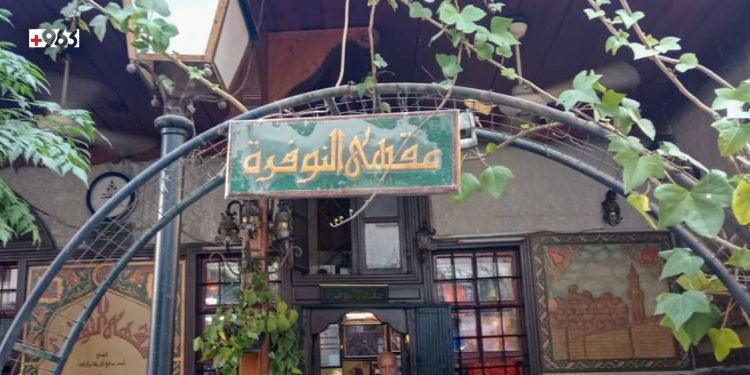
Syria is home to some of the oldest continuously inhabited cities in the world, and despite more than a decade of conflict that has left much of its historic architecture in ruins, there is one hidden gem in Damascus that has remained untouched.
Somewhere in the tangled, narrow streets of Old Town Damascus, between pomegranate juice vendors, falafel stalls and busy shops selling everything from spices, carpets, jewellery and crafts of all sorts, you will find Al‑Nofara Café. From the outside, it might seem like just another coffeehouse, but this café has been serving locals and travellers for more than 250 years, making it the oldest café in the Arab world.
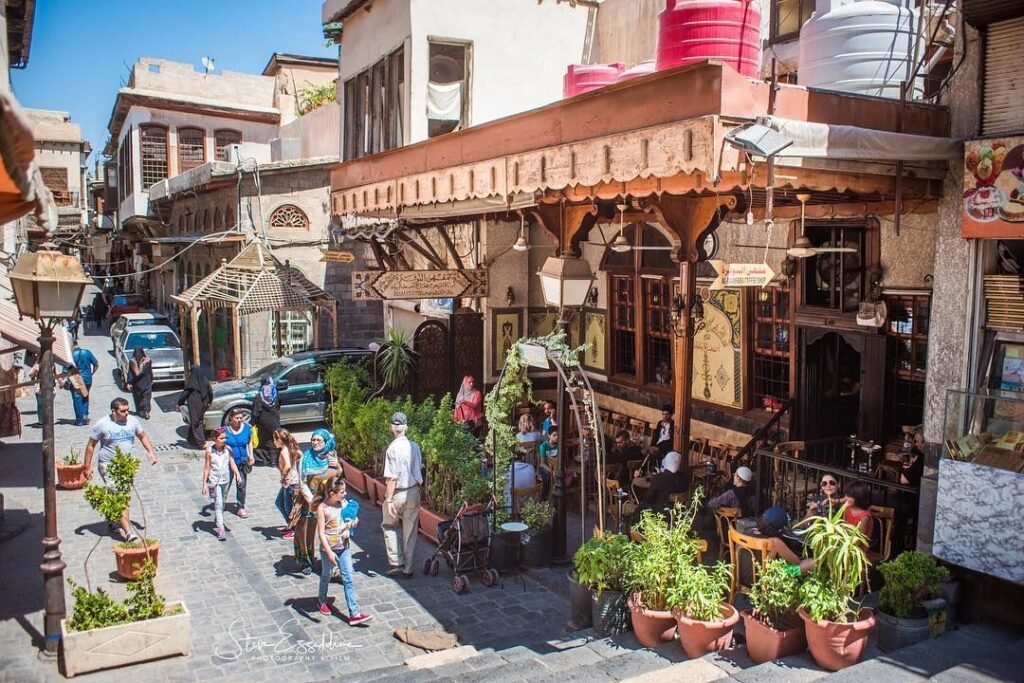
Table of Contents
Where to Find Al‑Nofara
To get to Al-Nofara, just follow the famous Al‑Hamidiyeh Souq, one of the oldest and largest covered markets in Syria, until you reach the walls surrounding the famous Umayyad Mosque, one of the oldest and most important mosques in the world.
Located on the corner where the Souq and the walls of the Mosque meets, you will see a cosy little courtyard with old wooden furniture and locals drinking tea and smoking shisha.
Al‑Nofara’s history
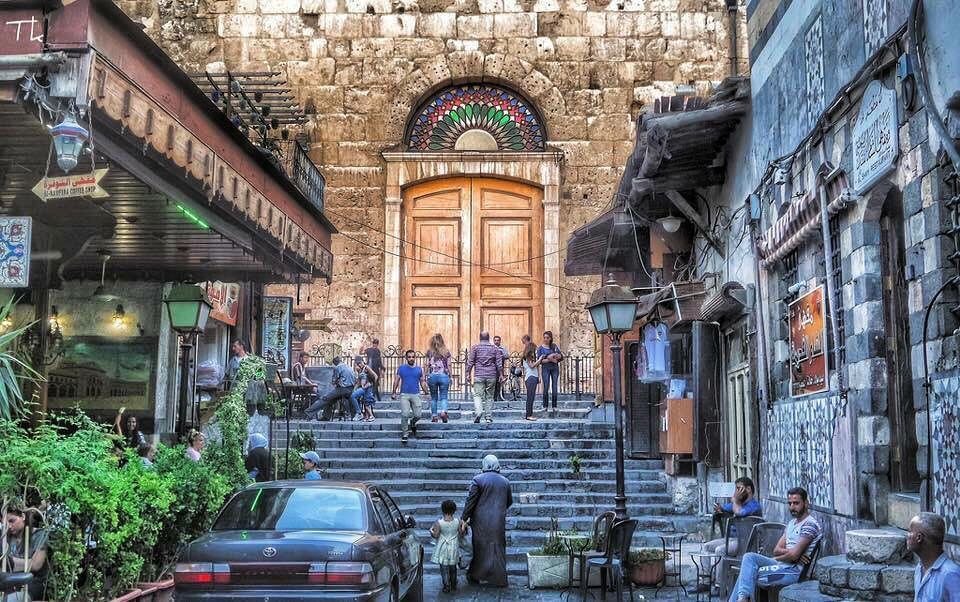
Al‑Nofara’s exact age is debated. While some claim it’s been open for as long as 500 years, most historians agree it has been open for at least 250.
The name, ‘Al‑Nofara’, directly translates as ‘The Fountain’, referring to a small fountain that once flowed nearby. While the fountain no longer exists, the café still looks and functions as it always has.
Throughout its long history, the café has welcomed merchants, students, poets, and travellers, and even in times of conflict, Al-Nofara stayed open and became an important community spot. This continuity is part of what makes it so special, especially in a country that has seen a lot of drastic changes throughout history.
The Hakawati Storytelling
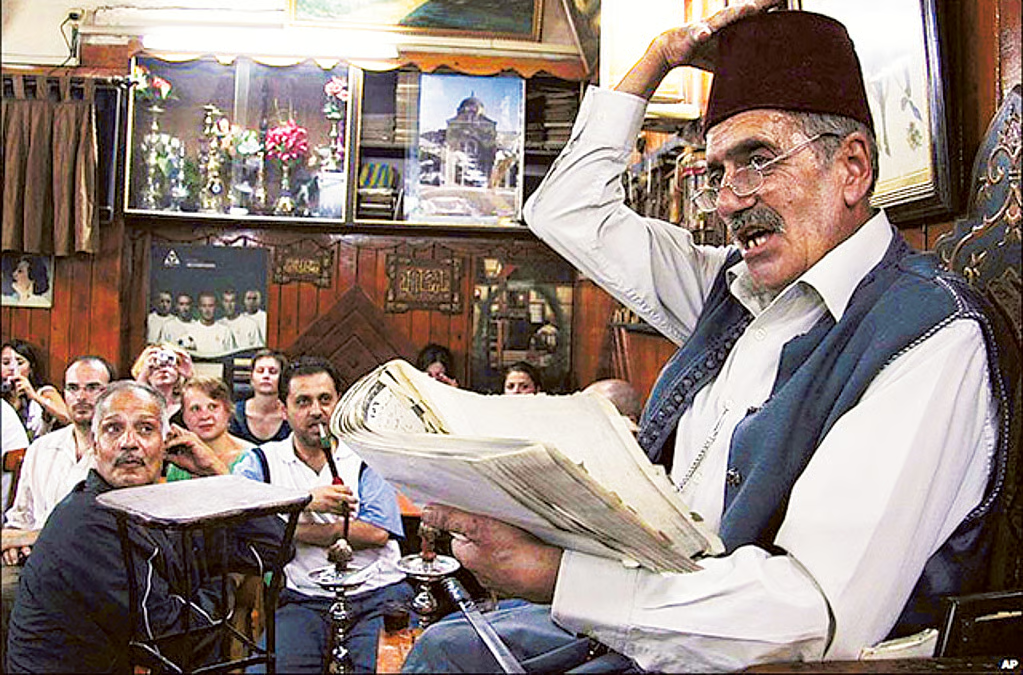
One of the most fascinating traditions at Al-Nofara is the traditional Arab folklore storytelling, known as Hakawati. This centuries-old practice was once one of the main forms of entertainment, long before television, radio, or social media.
In the evenings, a Hakawati would gather an audience in the café and tell tales of everything from heroes in battles to romance. The stories were often passed down through generations, and the storyteller would wear traditional clothing and use a sword or a stick as a prop, dramatically acting out parts of the story.
Today, this tradition is still going at Al-Nofara, particularly during Ramadan. After breaking the fast, locals gather in the café, sipping tea or coffee, as the Hakawati performs.
Why visit Al-Nofara
Al-Nofara is not a preserved museum or a staged tourist attraction; it is a functioning café where locals have come to relax, socialise, and take a break from their busy, everyday live’s for centuries, and still do to this day.
The old wooden furniture, the tiled floors, and the simple interior all add to its charm. No matter what time of the day it is, you’ll see groups of Syrian uncles playing backgammon; friends of all ages sharing stories over small glasses of tea; and hear shisha pipes bubbling in the background.
For travellers, visiting Al-Nofara is not just about enjoying a coffee and resting your legs after a full day of browsing the markets and exploring the Umayyad Mosque. It’s like stepping into a time machine, that offers a rare chance to experience Syrian culture in its most authentic form, away from headlines and politics.
Despite the challenges Syria has faced, Al-Nofara continues to operate as it always has, and in a world where so much is constantly changing, places like this remind us of the importance of preserving tradition.